Three's a Crowd
Why Wanting More Rarely Means Getting It


Threesomes tend to appear in movies at moments designed to feel self-contained. Perhaps it’s after drinks, everyone just the right amount of sloshed. The smallest window opens: one person looks at another for a few seconds too long, the look is returned, and something irrevocably shifts—almost by chance. The dance commences. Everyone is happy. Everything is beautiful. Nothing hurts.
A tryst between three (or more) people promises an entanglement where no one is deprived, no one is left out, and nothing has to last very long. It’s an alluring fantasy. It’s also a fragile one.
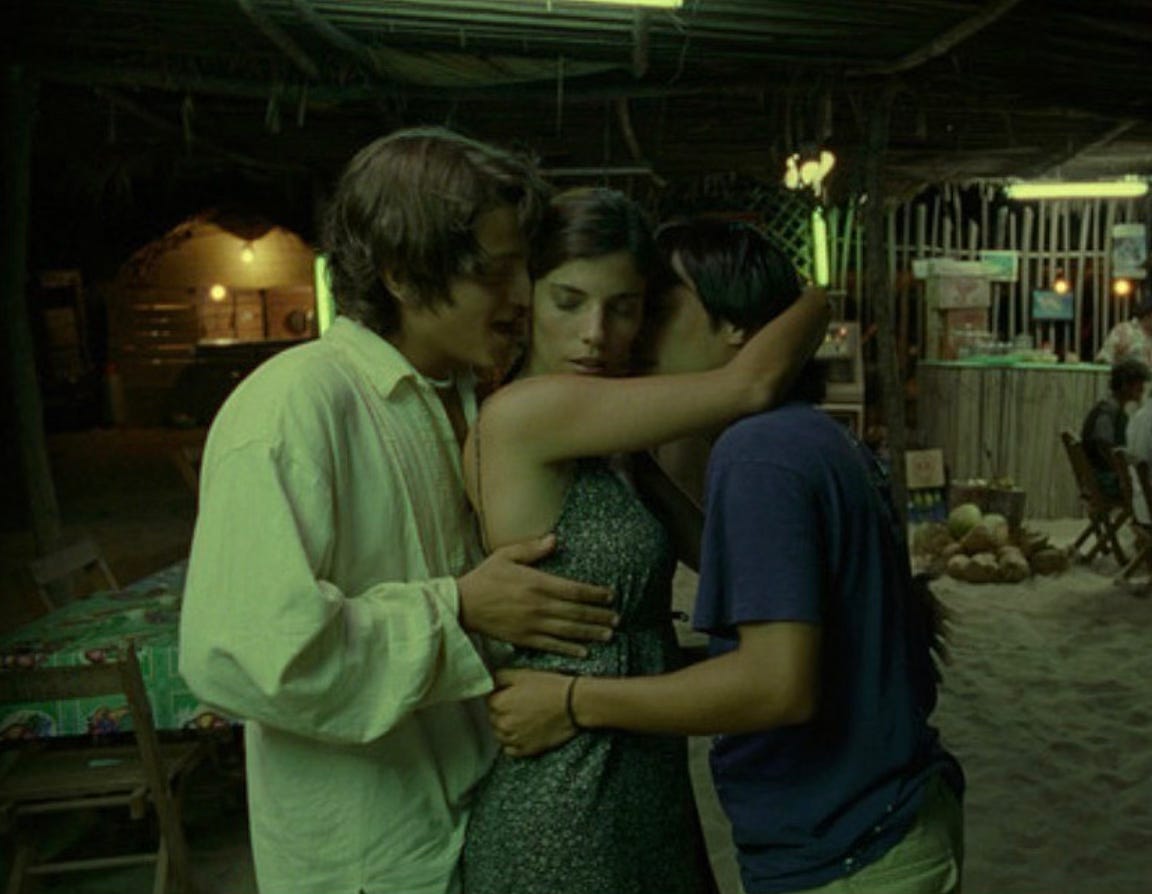
Alfonso Cuarón is unusually sensitive to the threesome as a coming-of-age arc. In Y Tu Mamá También, the triangle allows desire, loyalty, and friendship to coexist briefly with no fixed outcome. Want moves freely between bodies, impulsive and unclaimed by identity or future consequence. Adulthood looms, but remains just out of sight.
The threesome works precisely because it is sealed in time. Ironically, the woman acts as a catalyst for the spell breaking. The friendship does not survive it, and neither does she. Everything was perfect, but only for a moment.
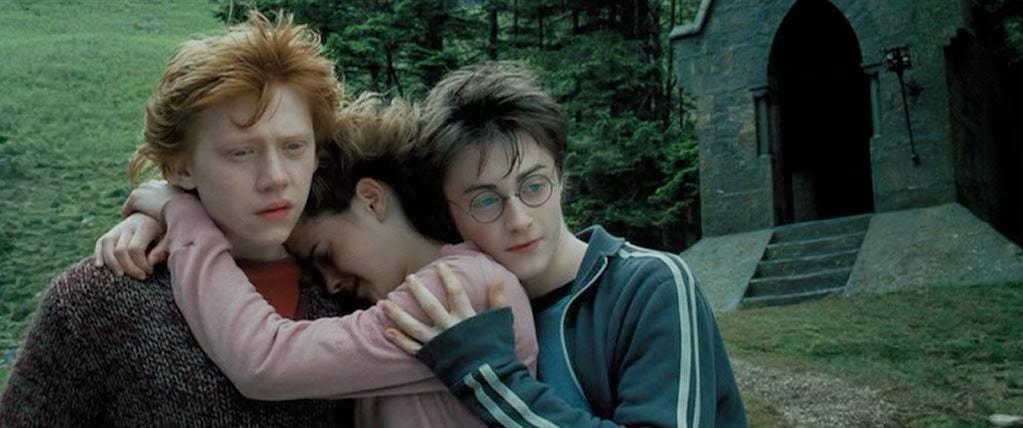
Cuarón touches on the same dynamic in Harry Potter and the Prisoner of Azkaban, a film with no sex at all. Harry, Hermione, and Ron function as a balanced psychic unit that is inevitably fractured by adolescence. Desire is displaced into jealousy and time. Affection splits. Loyalties circulate.
The story matures by allowing those tensions to remain unresolved. It is the first installment in the series that doesn’t offer the viewer a neat moral clarity wrapped in a bow. Instead it allows intimacy, romantic or otherwise, to coexist without resolution. In Cuarón’s hands, the threesome becomes a way of navigating the loss of innocence, with instability sustained long enough to register as a new kind of normal.
Challengers shows what happens when the threesome never ends.
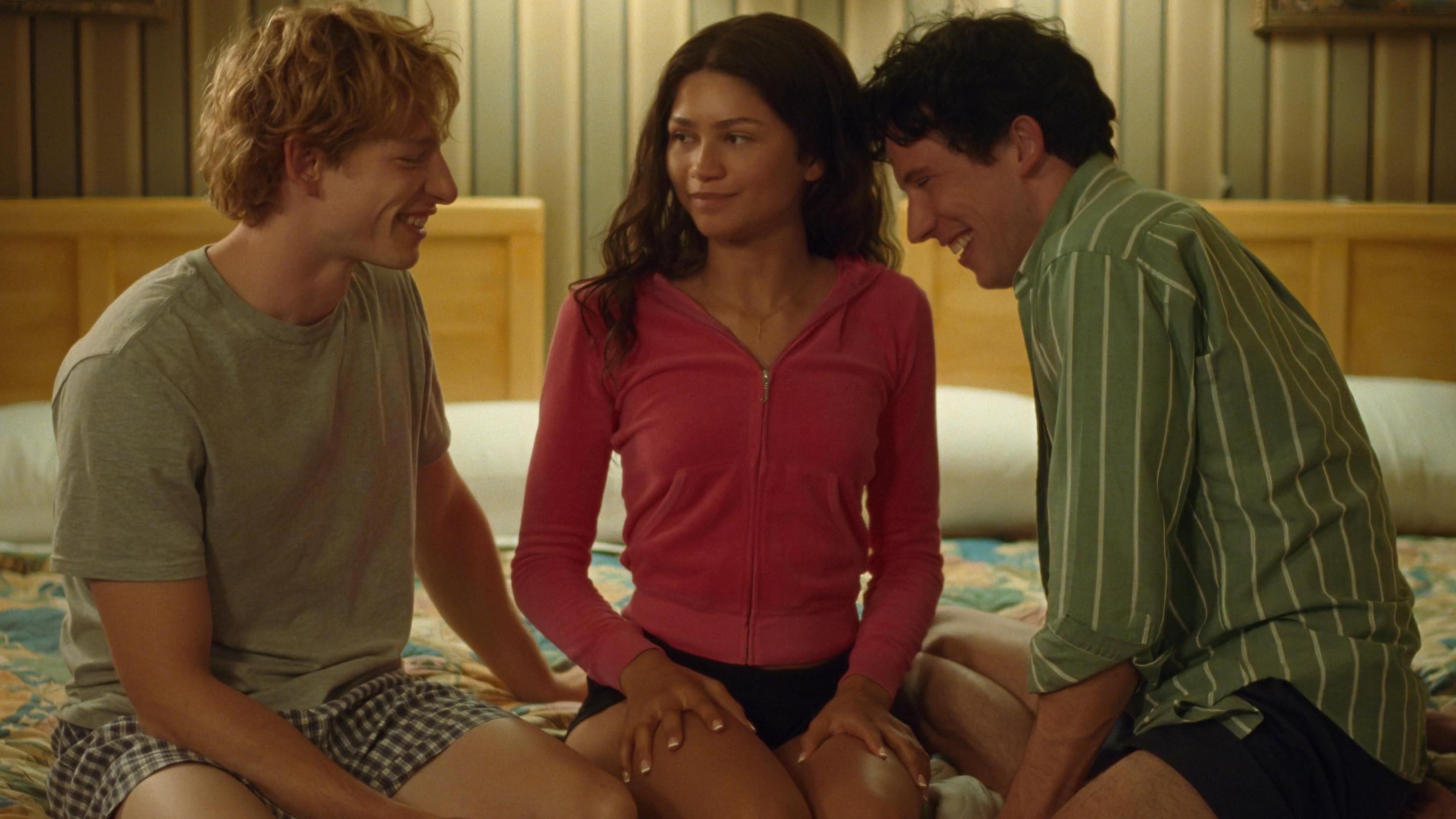
Here, the triangle is neither tender nor fleeting. Desire is dangled in front of the viewer like a piece of candy. Its circulation generates tension at the expense of intimacy. No one is expanded by it; everyone is on edge, waiting for the other shoe to drop. It asks the audience: How bad do you want it? Do you want it badly enough? Want becomes not the ultimate currency, but the only one: measured, withheld and redistributed for advantage, not unlike a Pavlovian reward, and not unlike tennis itself.
What’s striking is how little pleasure exists independent of power. Desire itself only produces exhaustion. The triangle sustains itself on instability. They need that destabilization to feel whole. The erotic charge survives only because no one wins.
Some cinematic threesomes are charged with urgency. Others arrive with a shrug.

In Vicky Cristina Barcelona, you see the limits of abundance most clearly. From the initial meeting, Juan Antonio announces his desire to sleep with both Cristina and Vicky. He proposes it as though it is the most obvious and reasonable instinct, and in a way it is: the quiet part out loud. Cristina is receptive, curious, impressed by his hutzpah, batting her eyelashes. Vicky is skeptical, morally resistant, even faintly repulsed. Nevertheless, the triangle still forms. Desire is open and unapologetic between Cristina and Juan Antonio, while remaining clandestine and destabilizing between Juan Antonio and a heavily engaged Vicky.
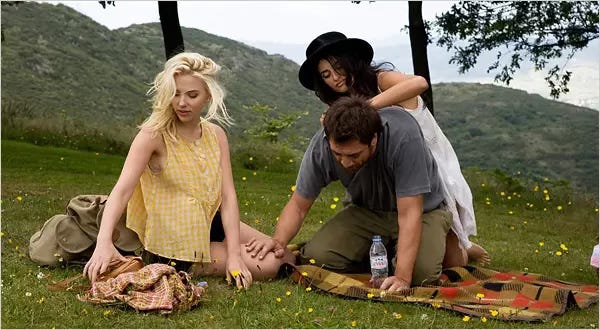
Cristina can participate without consequence because, for her, the arrangement is provisional. Vicky cannot. Desire unsettles her. When Juan Antonio’s ex-wife Maria Elena enters, the fantasy briefly stabilizes. She requires circulation to remain intact. Desire has to be outsourced or the structure collapses. And collapse it does. Cristina, chronically indecisive and flighty, rides off into the sunset leaving Juan Antonio and Maria Elena to fend for themselves. Unsurprisingly, the original pair, reminded of why it never worked between them in the first place, are unable to sustain their relationship. What initially looked like abundance turns out to be dependency.
Vicky, meanwhile, becomes the tether back to real life. She’s briefly, reluctantly pulled in and then decides the juice is not worth the squeeze. Not because desire isn’t powerful, but because sometimes that’s all it is: powerful, but ultimately a pain-in-the-ass mess you’re not equipped to manage. It’s like Stevie Nicks said, “lightning strikes, maybe twice.” And life goes on.
Cinema loves threesomes because they allow desire to exist without having to commit to meaning. They offer a fantasy of abundance, of wanting without consequence, of love without scarcity. But real intimacy eventually requires discipline precisely because desire persists. There will always be someone walking down the street you imagine naked. Maybe even a couple you imagine joining. For most people, there’s no come to Jesus moment where you magically become someone who wants only one thing or one person. The question isn’t whether we’re naturally monogamous. It’s whether desire is something to be indulged endlessly or something we’re willing to take responsibility for once it stops being novel.